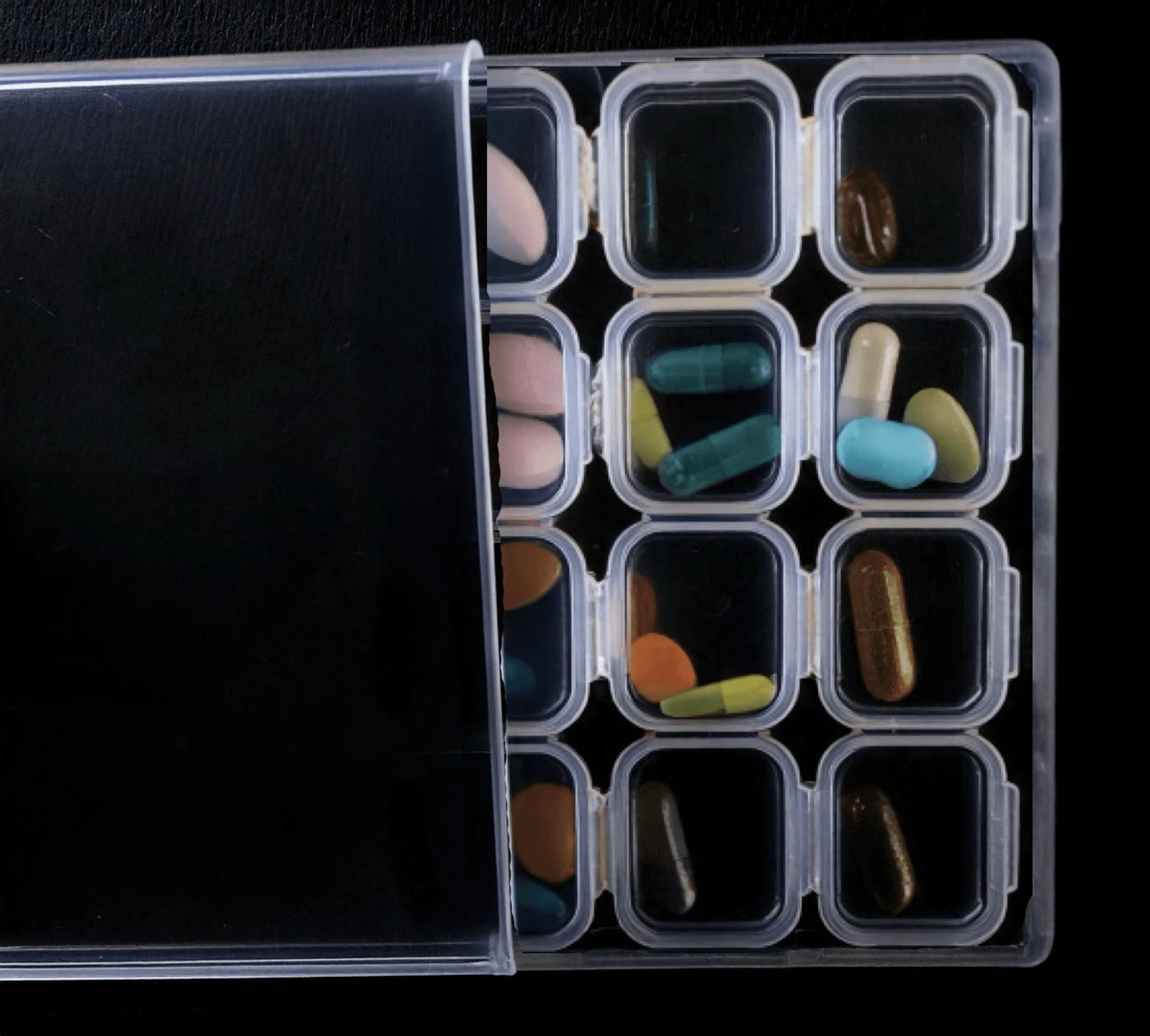
"I have been eating plant-based for three years, my sleep is solid, but by 3:00 PM my brain feels like wet cement. What vitamins should I actually be taking?"
This was the email we received from Marcus, a 34-year-old software engineer and amateur cyclist. He is the classic profile of someone who researches their own nutrition. He does not want wellness hype, he wants to ride his bike without his legs feeling like lead, and he wants to focus on his code.
When you transition to a vegetarian diet, the advice you get online is often incredibly superficial. You are told to eat more lentils, toss some pumpkin seeds on your salad, and take a generic multivitamin. This advice ignores basic human physiology and the biochemistry of nutrient absorption. Plant-based eating changes your metabolic baseline. If you do not adjust your supplementation strategy to match how the human gut processes plant molecules, you will eventually hit a wall.
Here is the objective breakdown of what happened when Marcus tried to fix his fatigue with standard off-the-shelf vitamins, why it failed, and how we structured a targeted micronutrient protocol to restore his energy levels.

The problem
Marcus switched to a vegetarian diet to improve his lipid profile and reduce his cardiovascular risk. For the first six months, he felt excellent. His recovery times after long rides were fast, his digestion improved, and he lost three kilograms.
By month eighteen, things changed. He started experiencing a distinct mental fatigue in the mid-afternoon. His training sessions on the bike felt sluggish. He was struggling to maintain his target power output, and his heart rate remained elevated for longer periods after hard intervals.
He went to his general practitioner and requested a standard blood panel. The results came back within normal reference ranges. His hemoglobin was 14.2 g/dL, which is perfectly healthy. His doctor told him he was simply working too hard and suggested he drink more water.
This is a common issue we see at Mythamin. A standard blood panel often misses subclinical deficiencies. His hemoglobin was normal, but his iron storage was depleted. When we looked at his expanded biomarkers, we saw a different story.
Here was Marcus's baseline biomarker profile:
Marker | Baseline Value | Target Range | Status
-------------------|----------------|--------------|--------
Serum B12 | 185 pg/mL | >400 pg/mL | Low-normal
Serum Ferritin | 14 µg/L | 30-150 µg/L | Deficient
Serum 25(OH)D | 22 ng/mL | 30-50 ng/mL | Insufficient
Serum Zinc | 65 µg/dL | 70-120 µg/dL | Low
While his hemoglobin was fine, his serum ferritin, which measures stored iron, was at 14 µg/L. A ferritin level below 30 µg/L indicates depleted iron stores, which directly limits mitochondrial energy production even before clinical anemia develops. If you are experiencing this kind of unexplained fatigue despite normal basic lab work, you can read our detailed guide on why you might be tired even when your blood test is normal.
What we tried first
Before reaching out to us, Marcus did what most smart, skeptical adults do. He went to a local health store and bought a premium, plant-based multivitamin targeted at vegetarians. He spent 45 EUR on a bottle of 90 capsules.
The label looked impressive. It promised 100% of the Recommended Dietary Allowance (RDA) for every major micronutrient, including iron, zinc, and B12. He took one capsule every morning with his breakfast, which usually consisted of oatmeal, soy milk, pumpkin seeds, and a double shot of espresso.
He followed this routine for eight weeks. He expected his mental clarity to return and his recovery times to drop. Instead, his afternoon fatigue deepened. He started experiencing mild digestive distress, and his training metrics on his bike continued to decline.
This is the point where many vegetarians assume that a plant-based diet simply does not work for their biology and return to eating meat. The reality is not a failure of the diet, but a failure of the supplement design. Generic multivitamins are formulated for label appeal, not human biochemistry.

What broke
Marcus's self-prescribed protocol failed due to three main biochemical bottlenecks: receptor competition, low bioavailability, and absorption inhibitors.
First, his multivitamin contained 14 mg of iron as ferrous sulfate and 15 mg of zinc as zinc oxide, alongside 200 mg of calcium carbonate. In the human gut, iron, zinc, and calcium utilize the same transport pathway, specifically the divalent metal transporter 1 (DMT1). When you flood these receptors with a high dose of calcium, the absorption of both iron and zinc is severely inhibited.
Second, his breakfast was rich in phytates. Phytates are antioxidant compounds found in oats, nuts, and seeds. They bind tightly to minerals like zinc and iron in the digestive tract, creating insoluble precipitates that the body cannot absorb. A study published in the American Journal of Clinical Nutrition demonstrated that non-heme iron absorption can be reduced by up to 90% when consumed alongside phytate-rich foods.
Third, the form of B12 in his multivitamin was cyanocobalamin at a dose of 10 µg. While 10 µg is technically above the RDA of 2.4 µg, the absorption kinetics of B12 are non-linear. The human body absorbs B12 through intrinsic factor receptors in the ileum, which saturate at approximately 1.5 to 2 µg per meal. The remaining fraction must be absorbed via passive diffusion, which has an absorption rate of only about 1%. A 10 µg oral dose yields less than 2 µg of absorbed B12, which is insufficient to rebuild depleted tissue stores. Although the biological half-life of stored B12 in the liver is several years, active absorption in the gut is highly limited. The clinical dynamics of B12 metabolism are detailed thoroughly by the National Institutes of Health. You can read more about the mechanics of B12 absorption in our B12 deficiency symptoms and recovery protocol.
Finally, the calcium carbonate and ferrous sulfate caused mild gut irritation. Unabsorbed iron passes into the colon, where it feeds opportunistic bacteria and causes oxidative stress, leading to the bloating and constipation Marcus experienced.
The fix
To correct Marcus's serum levels, we had to abandon the "all-in-one" multivitamin approach and design a targeted, spaced protocol using highly bioavailable nutrient forms.
- Iron Bisglycinate: We replaced ferrous sulfate with iron bisglycinate. Iron bisglycinate is an amino acid chelate. Because the iron is bound to two glycine molecules, it does not ionize in the stomach. This allows it to bypass the standard DMT1 receptor pathway and avoid competition with other minerals. It also prevents the iron from reacting with dietary phytates. We set his elemental dose at 25 mg, taken in the evening, at least two hours after his last meal and away from any coffee or tea. We paired this with 250 mg of ascorbic acid (Vitamin C) to keep the iron in its more soluble ferrous state.
- Methylcobalamin (B12): We addressed his B12 deficiency. We switched him to methylcobalamin, a coenzyme form of B12 that does not require the body to strip away a cyanide molecule before use. We utilized a therapeutic daily dose of 500 µg. At this dose, even with intrinsic factor saturation, passive diffusion yields an absorbed dose of approximately 7 µg, allowing him to steadily rebuild his serum levels.
- Zinc Picolinate: We introduced zinc picolinate at a modest 15 mg elemental dose. Zinc picolinate has been shown to have significantly higher bioavailability than zinc oxide or zinc gluconate, particularly in plant-based diets where phytate intake is high, as documented in primary research on zinc absorption rates.
- Vegan Vitamin D3: We addressed his vitamin D status. Plant-based diets contain virtually no vitamin D3. We introduced a vegan D3 sourced from lichen at a daily dose of 2000 IU, taken with his largest, fat-containing meal to maximize absorption. While D2 is technically vegan, clinical trials indicate that vitamin D3 is significantly more effective at raising and maintaining long-term serum 25(OH)D levels compared to D2.
Here is how we structured the raw materials in his protocol:
| Micronutrient | Standard Multivitamin Form | Bioavailable Form We Used | Daily Dose | Timing Protocol |
|---|---|---|---|---|
| Vitamin B12 | Cyanocobalamin | Methylcobalamin | 500 µg | Morning, empty stomach |
| Iron | Ferrous Sulfate | Iron Bisglycinate | 25 mg | Evening, 2 hours post-dinner |
| Vitamin D3 | Ergocalciferol (D2) | Cholecalciferol (from lichen) | 2000 IU | Lunch, with dietary fat |
| Zinc | Zinc Oxide | Zinc Picolinate | 15 mg | Mid-afternoon, away from iron |
This is the level of personalization we build into our formulas. If you want to see what your own nutrient gaps might look like based on your diet and lifestyle, you can take our free 2-minute body quiz.
Results
Marcus followed this targeted protocol for exactly twelve weeks. He did not change his training volume, his sleep hygiene, or his basic vegetarian diet.
The first change he noticed was digestive. Within four days of stopping the generic multivitamin, his bloating and mild constipation resolved.
By week six, his afternoon cognitive fatigue began to lift. He no longer felt the urge to reach for a third espresso at 3:00 PM. His power output on his bike stabilized during long, aerobic rides, and his recovery time between high-intensity intervals shortened.
At week twelve, we ran another blood panel to measure his progress.
His serum ferritin rose from a deficient 14 µg/L to a healthy 45 µg/L. His serum 25(OH)D levels reached 38 ng/mL, moving him out of the insufficient range. His serum B12 climbed to 410 pg/mL, and his zinc levels normalized at 88 µg/dL.
Marcus did not experience a miraculous transformation. He did not wake up with superhuman energy. Instead, he regained his normal physiological baseline. His body was finally getting the raw materials it needed to support cellular energy production, oxygen transport, and neurological function.
What we would do differently
While Marcus's results were highly successful, no protocol is perfect. If we were starting his protocol today, there are two adjustments we would make to optimize his results even further.
First, we would have requested a methylmalonic acid (MMA) test alongside his initial blood panel. Serum B12 can sometimes show a false normal if there is high intake of inactive B12 analogues from seaweeds or fermented foods. An MMA test is a much more sensitive marker of tissue-level B12 deficiency, as MMA levels rise only when cellular B12 is genuinely depleted.
Second, we would have adjusted his zinc dosing to an alternating-day schedule. Emerging research suggests that daily zinc supplementation can upregulate metallothionein, a protein that binds zinc in the gut and can eventually limit its absorption over time. Alternating days might preserve long-term absorption kinetics.
When you look for vitamins to take on a vegetarian diet, remember that the form, dose, and timing of your nutrients matter far more than the list of ingredients on a generic label. If you are ready to stop guessing and build a protocol grounded in your actual physiological needs, you can explore how our personalized subscriptions are composed.
By addressing these subclinical deficiencies with targeted, bioavailable nutrients, Marcus was able to reclaim his energy and athletic performance. Transitioning to a plant-based diet doesn't mean sacrificing your vitality, it simply requires a smarter, more scientifically rigorous approach to supplementation. For a deeper look at the clinical efficacy of targeted micronutrient protocols in plant-based cohorts, you can review the latest comparative trials on vegetarian supplementation outcomes.